The Art and Utility of Continuous Line Design of Wood
In the realm of graphic design and digital illustration, the concept of minimalism often leads to profound visual impact. One technique that has gained significant traction across various industries is the continuous line drawing method. When applied to natural textures, specifically wood, this approach creates a striking contrast between organic complexity and geometric precision. The Continuous Line Design of Wood represents more than just an aesthetic choice; it is a versatile asset that bridges the gap between artistic expression and functional utility. By reducing the intricate grain patterns of timber into a single, unbroken stroke, designers can capture the essence of the material without the visual clutter of traditional rendering.
Defining the Aesthetic: Single Stroke on White
The core characteristic of this style lies in its restraint. Imagine a pristine white canvas where a single black line flows uninterrupted from start to finish. This line does not lift off the surface; instead, it weaves, curves, and loops to define the contours of a wooden object or the texture of a wood board. This specific visual language, known as a single line decorative element drawn on white, offers a level of sophistication that resonates with modern audiences. It strips away shadows, gradients, and color fills, leaving only the pure form and flow of the subject matter.
When applied to wood, the continuous line technique captures the unique irregularity of the grain. Unlike a photograph which shows every knot and scratch, a continuous line interpretation abstracts these details into rhythmic patterns. The artist or algorithm must decide which lines are essential to convey the "woodness" of the image. This selective process results in a design that feels both handcrafted and mathematically precise. For professionals looking to elevate their brand identity, this clean, monochromatic approach ensures that the message remains clear and unobstructed by unnecessary visual noise.
The Role of Measurement Tools in Digital Art
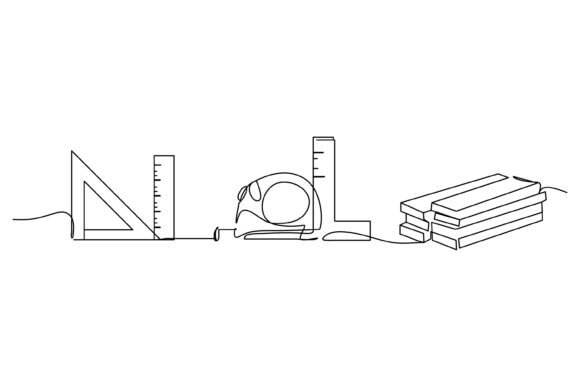
A fascinating intersection occurs when we consider the tools used to create these designs. While the final output appears fluid and spontaneous, the underlying structure often relies on precision instruments. The concept of a continuous line design of wood board measuring ruler highlights this duality. In many practical applications, such as architectural diagrams or woodworking schematics, the wood texture is overlaid onto technical drawings of rulers or measuring tapes. Here, the continuous line serves a dual purpose: it provides the tactile feel of the material while maintaining the clarity required for measurement.
This integration is particularly useful in educational materials and instructional guides. A diagram showing how to measure a piece of lumber becomes more engaging when the wood itself is rendered in a stylish, continuous line format. The ruler markings remain sharp and legible against the flowing lines of the wood grain, creating a visual hierarchy that guides the viewer's eye. Whether it is a physical drafting tool or a digital vector representation, the combination of measurement and artistic rendering demonstrates how functionality and beauty can coexist within a single frame.
File Formats and Technical Flexibility
For creators and business owners, the versatility of these assets is paramount. The availability of these designs in multiple formats—specifically EPS, SVG, and JPG—ensures they can be utilized across a wide spectrum of media. Understanding the nuances of each format is crucial for maximizing the potential of the Continuous Line Design of Wood.
- SVG (Scalable Vector Graphics): This is arguably the most important format for web and screen-based applications. Because SVG files are resolution-independent, the single line drawing of the wood texture can be scaled from a small icon to a massive billboard without any loss of quality. The mathematical paths that define the continuous line remain crisp at any zoom level, making it ideal for responsive websites and high-resolution displays.
- EPS (Encapsulated PostScript): Preferred in professional print environments, EPS files allow for high-quality reproduction on large-format printers. When a designer needs to apply the wood texture to packaging, brochures, or signage, the EPS format ensures that the lines remain smooth and the edges stay sharp during the printing process. It is the standard for offset printing and professional typesetting.
- JPG (Joint Photographic Experts Group): While raster-based, JPG files offer universal compatibility. They are perfect for social media posts, email marketing campaigns, and quick previews where file size is a concern. Although they lack the scalability of vector formats, a high-resolution JPG of a continuous line wood design can still deliver excellent visual results for general consumer use.
The ability to switch between these formats means that a single creative asset can serve an entire campaign. A marketing team might use the SVG version for their website header, the EPS version for printed catalogs, and the JPG version for Instagram stories. This adaptability reduces the need for multiple design iterations and streamlines the production workflow.
Applications Across Industries
The utility of the continuous line wood design extends far beyond simple decoration. Its clean, minimalist nature makes it suitable for diverse sectors ranging from interior design to technology branding.
Interior Design and Architecture
Architects and interior designers frequently utilize line art to communicate concepts to clients. A floor plan or elevation drawing featuring a continuous line design of wood can instantly convey the warmth and texture of flooring, cabinetry, or structural beams without overwhelming the technical details. This approach helps clients visualize the final space more effectively, as the simplified texture focuses attention on the layout and proportions rather than getting lost in photorealistic renderings.
Product Packaging and Branding
In the competitive world of consumer goods, packaging must stand out on crowded shelves. Brands selling eco-friendly products, furniture, or artisanal crafts often leverage wood imagery to signal sustainability and natural origins. Using a single line decorative element drawn on white allows for a sophisticated, premium look. It suggests a connection to nature while maintaining a modern, clean aesthetic. The absence of heavy colors reduces ink costs in printing while increasing the perceived value of the product through elegant simplicity.
Educational and Research Materials
For educators and researchers, clarity is key. Diagrams explaining the properties of wood, such as grain direction, growth rings, or moisture content, benefit immensely from continuous line illustrations. These drawings can isolate specific features of the wood structure, making complex biological or physical concepts easier to understand. When combined with elements like a wood board measuring ruler, these illustrations become powerful teaching tools that bridge the gap between theoretical knowledge and practical application.
Psychological Impact and Consumer Perception
Why does this specific style resonate so deeply with audiences? The psychology behind continuous line art is rooted in the human brain's preference for pattern recognition and simplicity. A single, unbroken line implies continuity, flow, and unity. When this is applied to wood—a material associated with stability, growth, and nature—it creates a harmonious visual experience. The stark contrast of the black line against the white background demands attention, yet it does so gently, avoiding the aggression of bold colors or chaotic imagery.
Consumers often associate this minimalist style with high-quality craftsmanship. The effort required to draw a complex object in one continuous motion suggests skill and intentionality. When a brand adopts this visual language, it implicitly communicates values of precision, focus, and elegance. Furthermore, the "white space" surrounding the line art gives the design room to breathe, allowing the viewer to project their own interpretations onto the image. This engagement fosters a deeper emotional connection between the audience and the brand.
Implementation Strategies for Creators
For those looking to incorporate these designs into their work, the process begins with understanding the source material. High-quality vectors are essential. When downloading assets, ensuring that the file includes the necessary formats (EPS, SVG, JPG) is the first step toward a successful implementation. Designers should experiment with scaling the line weight to suit different mediums; a thicker line might work better for large signage, while a finer line is preferable for detailed web graphics.
Additionally, context matters. Placing a continuous line wood design against a textured paper background can enhance its organic feel, while keeping it on a pure white background maximizes its modern appeal. Experimentation with color, even though the base is monochromatic, can also yield interesting results. Changing the line color to match a brand's palette while retaining the white background can maintain the style's integrity while aligning it with corporate identity guidelines.
Future Trends in Minimalist Illustration
As digital interfaces continue to evolve, there is a growing demand for lightweight, fast-loading, and visually distinct graphics. The Continuous Line Design of Wood fits perfectly into this trend. Its low file size compared to photorealistic images contributes to faster website load times, which is a critical factor for SEO and user experience. Moreover, the timeless nature of line art ensures that these designs do not quickly become dated, offering long-term value for brands investing in their visual identity.
We are likely to see an increase in the use of these designs in augmented reality (AR) and virtual reality (VR) environments. The clean lines provide a clear framework for 3D modeling and animation, serving as a stylistic foundation that can be brought to life in interactive spaces. Whether it is a virtual showroom displaying wooden furniture or an educational app teaching carpentry skills, the continuous line aesthetic provides a consistent and recognizable visual language.
Ultimately, the fusion of natural texture and minimalist technique represents a significant shift in how we visualize the built environment. It challenges the notion that realism is the only way to represent truth. Instead, it suggests that abstraction can reveal deeper truths about the materials we use and the spaces we inhabit. By embracing the Continuous Line Design of Wood, creators and businesses alike can tap into a rich vein of visual storytelling that is both functional and profoundly beautiful.