Camping Tent Bonfire Forest Silhouette Design Guide
The Camping Tent Bonfire Forest Silhouette represents a specific aesthetic within the realm of outdoor and adventure graphic design. This style relies on high-contrast, black-and-white imagery to depict iconic elements of the wilderness experience: the pitched tent, the crackling fire, and the dense tree line. Unlike photorealistic renderings or colorful illustrations, this approach strips away detail to focus on form and composition. For designers, crafters, and brand managers, understanding the utility and limitations of this silhouette style is essential for determining if it aligns with specific project goals.
Understanding the Silhouette Aesthetic
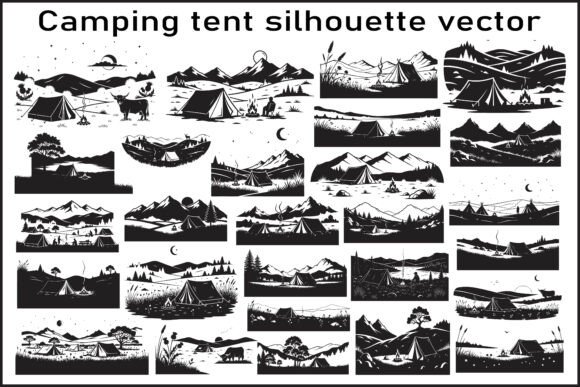
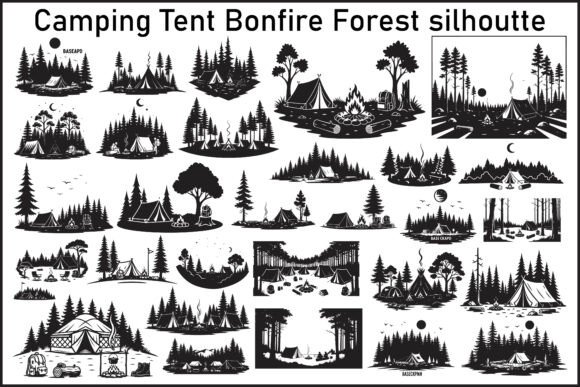
A Camping Tent Bonfire Forest Silhouette is defined by its binary nature—typically solid black shapes against a white background, or vice versa. This reductionism serves a functional purpose in design. By removing texture, color gradients, and complex shading, the image becomes universally recognizable and highly versatile. The core components usually include a triangular tent structure, a stylized flame or bonfire, and jagged or rounded tree profiles that suggest a forest canopy.
This style often incorporates decorative nature symbols, such as stars, moons, or geometric patterns, to enhance the composition without cluttering the visual space. The result is a clean, modern look that communicates the essence of camping and nature exploration instantly. Because the design relies on shape rather than color, it translates effectively across various mediums, from small digital icons to large-scale outdoor banners.
Reasons to Consider This Design Style
There are several practical reasons why a creator might choose a Camping Tent Bonfire Forest Silhouette over other artistic styles. The primary driver is versatility. In the world of Print-on-Demand (POD) and apparel design, simplicity often yields better results. A silhouette ensures that the design remains legible even when scaled down for a sticker or a phone case. Furthermore, because the design is typically monochromatic, it avoids issues related to color shifting during the printing process, which can be a significant concern with multi-colored raster images.
Another compelling reason is compatibility with cutting machines. Hobbyists and small business owners using tools like Cricut or Silhouette rely heavily on vector formats. A silhouette collection provides clear, distinct paths that are easy for software to interpret, reducing the likelihood of cutting errors. This makes the style particularly attractive for creating vinyl decals, iron-on transfers, and layered paper crafts where precision is paramount.
Benefits and Technical Advantages
The technical structure of a professional Camping Tent Bonfire Forest Silhouette collection offers distinct advantages. Most high-quality resources provide files in multiple formats, including EPS, SVG, PNG, and JPG. Each format serves a specific workflow:
- SVG Files: These are scalable vector graphics that maintain crisp edges at any size. They are ideal for cutting machines and web use, allowing users to resize the tent or forest elements without pixelation.
- EPS Files: As a professional vector standard, these are fully editable in software like Adobe Illustrator or CorelDRAW. This allows designers to modify individual elements, such as changing the shape of the trees or adding custom text, while retaining vector quality.
- PNG Files: With transparent backgrounds, these high-resolution raster images are perfect for quick compositing in photo editing software or for use in social media graphics where a vector editor is not available.
- JPG Files: These serve as high-quality previews or for print applications where vector editing is unnecessary but resolution must remain high.
The ability to access all these formats in one package streamlines the production process. It eliminates the need for manual conversion, which can sometimes degrade image quality or introduce errors in the vector paths.
Tradeoffs and Limitations
While the silhouette style is powerful, it is not suitable for every design scenario. The most significant tradeoff is the lack of depth and texture. If a project requires conveying the warmth of a fire through glowing embers or the rough texture of pine bark, a flat black silhouette will fall short. It conveys the idea of a campsite but cannot replicate the sensory details of the experience.
Additionally, the minimalist nature of the design may feel too stark for brands aiming for a playful, vibrant, or whimsical identity. A children's book cover or a summer festival poster might benefit more from watercolor textures or bold, saturated colors. Relying solely on black and white can sometimes limit the emotional range of the visual communication, making it appear utilitarian rather than evocative.
Situations Where This Style Excels
The Camping Tent Bonfire Forest Silhouette is an excellent fit for projects requiring clarity and scalability. It is particularly effective for:
- Apparel Branding: T-shirts, hoodies, and hats often feature silhouettes because they age well and do not crack or fade as easily as complex prints.
- Signage and Wayfinding: Trail markers and park signs utilize this style for immediate recognition from a distance.
- Digital Assets: Website headers, app icons, and social media avatars benefit from the clean lines that load quickly and display sharply on all devices.
- DIY Crafting: Stickers, magnets, and wall decals created with cutting machines rely on the precise geometry of silhouette vectors.
In these contexts, the design's strength lies in its ability to communicate a theme instantly without distracting the viewer with unnecessary details.
When to Consider Alternatives
Designers should consider alternative styles if their project demands high realism or emotional nuance. For example, a travel magazine cover featuring a specific national park would likely require a photograph or a detailed illustration to capture the unique landscape features. Similarly, if the target audience is very young, a cartoonish or colorful illustration might engage them more effectively than a stark black shape.
If the goal is to highlight a specific product feature, such as the waterproof material of a tent or the safety mechanism of a stove, a silhouette is insufficient. In these cases, technical drawings or realistic renders are necessary to convey functional information. Additionally, if the brand identity is built on a specific color palette that defines its market presence, forcing a monochromatic silhouette design might dilute brand recognition.
Decision-Making Insights
Before selecting a Camping Tent Bonfire Forest Silhouette for a project, creators should evaluate their end-use requirements. Ask whether the design needs to be resized frequently; if so, the vector capabilities of SVG and EPS files are crucial. Consider the production method: if using a heat press or cutter, the simplicity of the silhouette reduces production time and material waste. Finally, assess the brand voice. Does the project require a rugged, timeless aesthetic, or does it need to feel trendy and colorful?
Ultimately, the decision hinges on the balance between versatility and specificity. The silhouette style offers maximum flexibility for branding and merchandise but sacrifices the narrative depth of more complex art forms. By understanding these dynamics, designers can make informed choices that align with their creative vision and technical constraints.